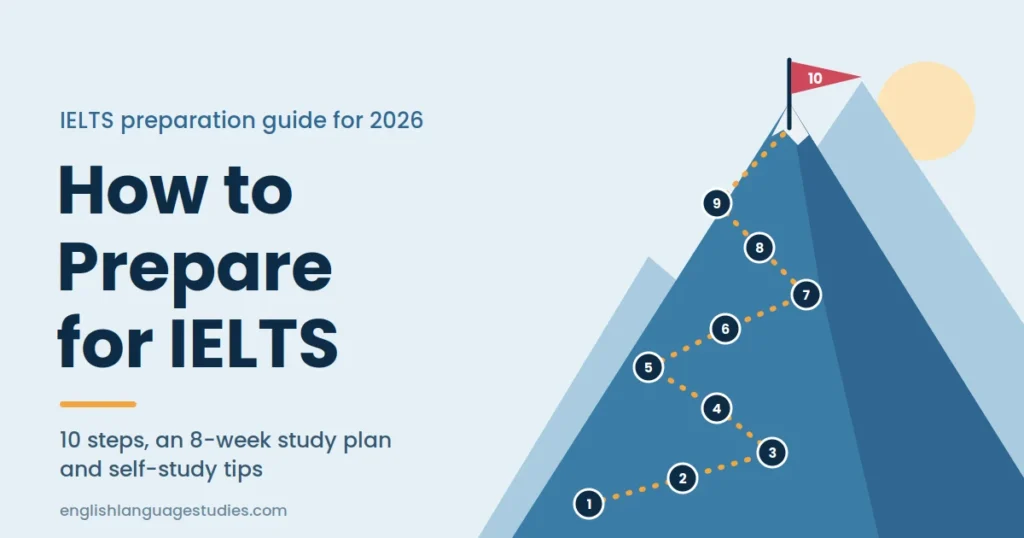
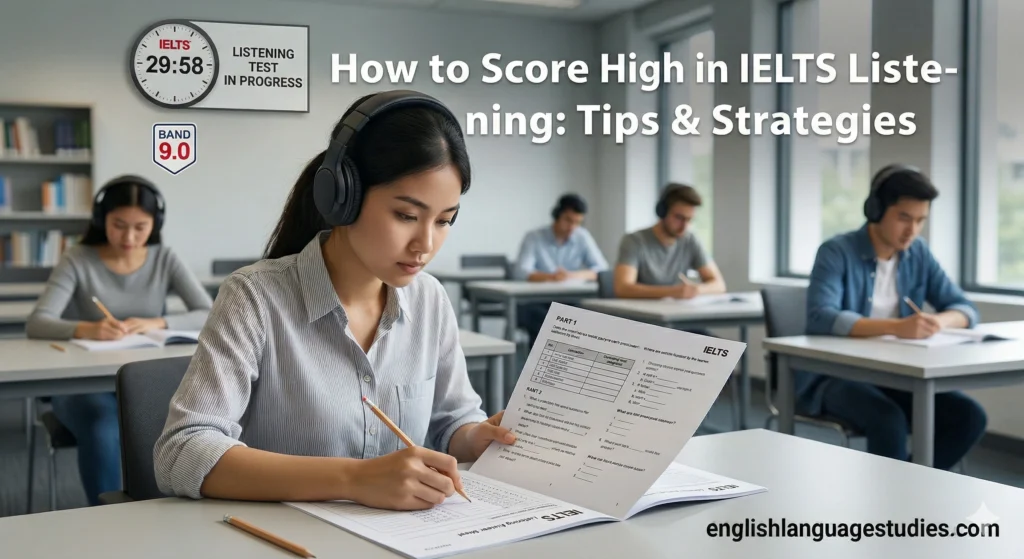
So, you’re thinking about applying to study abroad, migrate, or land a job overseas and the first thing standing between you and that goal is IELTS. Before you book the real exam, though, there’s a smarter first step: taking an IELTS assessment test online.
An online IELTS assessment gives you a realistic estimate of your current English level, shows you where you stand across Listening, Reading, Writing, and Speaking, and helps you decide exactly how much preparation you actually need. Instead of guessing, you get data.
In this guide, we’ll walk through what these tests really measure, how they work, how accurate they are, and what to do with your results once you have them. By the end, you’ll know exactly how to use an online IELTS assessment to build a smarter study plan.
What Is an IELTS Assessment Test?
An IELTS assessment test is a diagnostic tool that estimates your current English proficiency level using tasks similar to the official IELTS exam. It’s not the real test; it’s a preview of where you’d likely land if you sat the real one today.
Think of it like a fitness tracker for your English skills. It doesn’t replace a medical checkup, but it gives you a fast, useful snapshot of your current condition.
Most assessment tests are built around the same four skills the official exam measures:
- Listening — understanding spoken English in different accents and contexts
- Reading — comprehending academic or general texts under time pressure
- Writing — producing clear, organized written responses
- Speaking — communicating fluently and accurately, sometimes via recorded prompts
The output is usually an estimated IELTS band score on the standard 1–9 scale, along with a breakdown by skill.
Before paying the IELTS test fee in Pakistan, it’s a good idea to prepare thoroughly. Take a free IELTS mock test to understand the exam format, improve your score with regular IELTS reading practice, and strengthen your writing skills through our IELTS writing task 1 & IELTS writing task 2 guide. If you’re just beginning your journey, our course for spoken English guide can help build the confidence you need for the speaking section.
Why People Take These Tests Before the Real Exam
Here’s the practical logic behind it. If you don’t know your starting point, you can’t build an efficient study plan. An assessment test removes the guesswork by showing you:
- Your approximate current band score
- Your strongest and weakest skills
- How much time you realistically need before test day
How Do Online IELTS Assessment Tests Work?
Online assessment platforms simulate the structure of the real exam in a shorter, more accessible format. Here’s the general process.
Step by Step: Taking an IELTS Assessment Test Online
- Choose a test type — Academic or General Training, depending on your goal.
- Complete the sections — usually shortened Listening, Reading, Writing, and sometimes Speaking tasks.
- Submit your answers — objective sections (Listening, Reading) are graded instantly by algorithm.
- Get scored writing and speaking — some platforms use AI scoring, others offer human-reviewed feedback for a more accurate estimate.
- Receive your report — an estimated band score for each skill, plus an overall average.
Most online IELTS assessment tools take anywhere from 20 minutes (quick level checks) to over an hour (full-length mock tests) to complete.
Table: Typical Online Assessment Structure
| Section | Duration | Format | Scoring Method |
|---|---|---|---|
| Listening | 20–30 min | Audio clips + questions | Automated |
| Reading | 20–40 min | Passages + questions | Automated |
| Writing | 20–40 min | Task 1 & Task 2 essays | AI or human-reviewed |
| Speaking | 10–15 min | Recorded responses | AI or human-reviewed |
Types of IELTS Assessments Available Online
Not all assessments serve the same purpose. Understanding the differences helps you pick the right one.
1. Quick IELTS Level Test
A short quiz (often 10–20 minutes) that estimates your general English level: beginner, intermediate, or advanced rather than a precise band score. Useful as a first check before committing to deeper prep.
2. Full Length IELTS Mock Test
A complete simulation of all four skills under timed conditions, closely mirroring the real exam experience. This gives the most reliable estimate of your likely band score.
3. Skill Specific Practice Tests
Some platforms let you isolate one skill like say, just Writing or just Speaking if you already know that’s your weak area. This is ideal for targeted IELTS exam practice.
4. Free vs. Paid Assessments
A free IELTS assessment test usually covers Listening and Reading with automated scoring, since these are easiest to grade algorithmically. Paid versions often add human-graded Writing and Speaking feedback, which tends to be more precise.
Table: Comparing Assessment Types
| Type | Best For | Time Needed | Accuracy Level |
|---|---|---|---|
| Quick level test | First-time checkers | 10–20 min | General estimate |
| Full mock test | Serious test-takers | 2–3 hours | High |
| Skill-specific test | Targeted improvement | 20–40 min | Moderate–High |
| Free assessment | Budget-conscious learners | Varies | Moderate |
| Paid assessment | Accurate band prediction | Varies | High |
IELTS Assessment Test vs. Official IELTS Exam: What’s the Difference?
An IELTS assessment test estimates your level for free or low cost with no official certificate, while the official IELTS exam is a proctored, certified test recognized by universities, employers, and immigration authorities.
This distinction matters a lot, so let’s break it down clearly.
Table: Assessment Test vs. Official Exam
| Feature | Online Assessment | Official IELTS Exam |
|---|---|---|
| Purpose | Diagnostic / practice | Certified proof of English level |
| Cost | Often free or low-cost | Paid registration fee |
| Recognition | Not officially recognized | Accepted worldwide |
| Supervision | Usually unsupervised | Strictly proctored |
| Result validity | Estimate only | Official band score (valid 2 years) |
| Speaking format | Often recorded/AI-scored | Face-to-face with certified examiner |
| Scoring accuracy | Approximate | Precise, examiner-verified |
The key takeaway: use an online assessment to prepare and track progress, but never submit it as proof of proficiency. Only the official IELTS band score from a certified test center counts for visas, admissions, or job applications.
Benefits of Taking an IELTS Assessment Test Online
There’s a reason so many learners start their IELTS preparation journey with an online check-in first.
- Saves money — a free IELTS assessment test helps you avoid paying for the real exam before you’re ready.
- Identifies weak areas fast — you’ll know immediately if Writing or Speaking needs the most work.
- Builds exam familiarity — practicing the format reduces anxiety on test day.
- Tracks progress over time — retaking assessments monthly shows measurable improvement.
- Flexible scheduling — take it anytime, from home, without booking a test center slot.
- Low-pressure environment — great for nervous test-takers who want a trial run first.
Real-World Example
Imagine Priya, who’s applying for a master’s program requiring an overall band 7. She takes an IELTS practice test online and scores an estimated 5.5 overall, with Writing at 5.0. That single data point tells her exactly where to focus her next three months of study rather than spreading her effort evenly across all four skills.
How Accurate Are Online IELTS Assessment Tests?
Online IELTS assessments are generally accurate for Listening and Reading, since these are objectively scored, but less precise for Writing and Speaking, where human judgment plays a bigger role.
Here’s why the gap exists. Listening and Reading answers are either right or wrong, an algorithm can grade them reliably. Writing and Speaking, though, require judgment on coherence, vocabulary range, grammatical accuracy, and pronunciation, areas where AI scoring still has limitations compared to trained human examiners.
Factors That Affect Accuracy
- Scoring method — human-reviewed feedback tends to beat pure AI scoring for subjective skills.
- Test conditions — taking the test in a quiet, timed environment mirrors real exam accuracy better than casual attempts.
- Platform quality — established platforms with examiner-trained scoring models produce more reliable estimates than generic quizzes.
- Sample size — a single short quiz is less reliable than a full-length mock test.
As a rule of thumb, treat your online score as a ballpark figure within half a band of your likely real result, not an exact prediction.
How to Interpret Your Estimated Band Score
Once you get your results, understanding what the numbers mean is just as important as the score itself.
The IELTS Band Scale at a Glance
| Band | Level Description |
|---|---|
| 9 | Expert user |
| 8 | Very good user |
| 7 | Good user |
| 6 | Competent user |
| 5 | Modest user |
| 4 | Limited user |
| Below 4 | Extremely limited to non-user |
How to Read Your Skill Breakdown
Your report will usually show four individual scores plus an overall average. Here’s how to use that breakdown:
- If one skill is much lower than the others, that’s your priority area.
- If your overall score is close to your target (within 0.5 band), light, focused practice may be enough.
- If you’re 1+ band below target, plan for a longer, structured study period, often 2–3 months of consistent work.
Quick Example
| Skill | Estimated Band |
|---|---|
| Listening | 6.5 |
| Reading | 6.0 |
| Writing | 5.0 |
| Speaking | 5.5 |
| Overall | 5.75 (rounded to 6.0) |
In this example, Writing is clearly the weakest link, that’s where study time should go first.
Tips to Improve Your IELTS Score After Assessment
Once you know your baseline, here’s how to turn that data into progress.
1. Target Your Weakest Skill First
Don’t spread your effort evenly. If Writing pulled your score down, dedicate 40–50% of your study time there before balancing the rest.
2. Practice Under Timed Conditions
Simulating real exam timing builds speed and reduces panic. Use a IELTS mock test regularly, not just once.
3. Build Vocabulary Strategically
Learn topic-based vocabulary (environment, education, technology, health) rather than random word lists, IELTS topics repeat often.
4. Review Band Descriptors
Read the official band descriptors for Writing and Speaking so you understand exactly what examiners look for like task response, coherence, lexical resource, and grammatical range.
5. Get Feedback on Writing and Speaking
Self-assessment only goes so far. Seek a tutor, study group, or scored platform for objective feedback on these subjective sections.
6. Retake Assessments Periodically
Retesting every few weeks with a fresh IELTS practice test online shows whether your study plan is actually working.
7. Practice Active Listening Daily
Podcasts, interviews, and lectures in English help train your ear for varied accents used in the Listening section.
Expert Tip
“Treat every mock test like the real thing like same timing, same silence, same pressure. The exam-day version of you performs the way you practiced, not the way you hoped.”
Common Mistakes to Avoid
Even motivated learners fall into these traps. Watch out for them.
- Relying only on free tests without ever practicing under exam conditions
- Ignoring time limits during practice, which leads to shock on test day
- Skipping Speaking practice because it feels uncomfortable to record yourself
- Memorizing answers instead of building genuine language skills
- Taking one assessment and stopping rather than tracking progress over time
- Focusing only on vocabulary while neglecting grammar accuracy and coherence
- Assuming an online score is official and using it in applications where it isn’t accepted
Frequently Asked Questions
Is an online IELTS assessment test free?
Many platforms offer a free IELTS assessment test covering Listening and Reading, while more detailed Writing and Speaking feedback sometimes requires a paid upgrade.
How long does an online IELTS assessment take?
A quick level check takes about 10–20 minutes, while a full-length mock test covering all four skills can take 2–3 hours.
Can I use my online assessment score for university applications?
No. Online assessment scores are estimates for self-preparation only; universities require an official band score from a certified IELTS test center.
How accurate is an online IELTS level test?
It’s generally reliable for Listening and Reading, but Writing and Speaking estimates can vary depending on whether scoring is AI-based or human-reviewed.
What’s a good IELTS band score?
It depends on your goal, many universities require 6.0–7.0 overall, while some visa categories accept as low as 4.0–5.0. Always check your specific institution’s requirement.
How many times should I take a practice test before the real exam?
Most learners benefit from retaking a mock test every 2–4 weeks to track improvement, alongside daily skill practice in between.
Do online assessments cover both Academic and General Training IELTS?
Most reputable platforms offer both formats, so choose the one matching your visa, migration, or study requirement.
What score improvement is realistic in one month?
With focused daily practice, a 0.5 band improvement in a month is a realistic and common target for most learners.
Are AI-scored Speaking assessments reliable?
They’re useful for quick feedback on fluency and pronunciation patterns, but human reviewed scoring remains more accurate for nuanced criteria like coherence and lexical range.
Should beginners take a full mock test or a quick level test first?
Beginners should start with a quick IELTS English level test to get oriented, then move to a full mock test once they’re familiar with the format.
Conclusion: Start Your IELTS Journey with Real Data, Not Guesswork
An IELTS assessment test online isn’t just a quiz, it’s the fastest way to understand exactly where you stand and what to work on next. Instead of studying blindly, you get a clear starting point, a skill-by-skill breakdown, and a realistic sense of how much time you’ll need before test day.
The smartest approach is simple: take an assessment now, use the results to build a focused study plan, retest every few weeks, and adjust as you improve. Small, consistent steps backed by real data beat scattered, unfocused effort every time.
Ready to find out where you stand? Take a free online IELTS assessment today, review your band breakdown, and start turning your weakest skill into your next strength.