So you want to learn English, but you’re drowning in apps, websites, channels and books, all promising the fastest route to fluency. Some are excellent. Many are overwhelming. A few are a waste of your time.
The good news is that you don’t need all of them. You need the right combination: something structured, something for speaking practice, something for vocabulary, and plenty of real English you actually enjoy.
This guide brings together 52 of the best resources for learning English, sorted by skill and purpose. You’ll find AI speaking tools, apps, websites, YouTube channels, podcasts, tutors, reading and writing tools, and books, plus a simple plan for combining them.
Quick Picks: The Best Resource for Each Goal
| Goal | Top pick | Cost |
|---|---|---|
| Build a daily habit | Duolingo | Free, with a paid plan |
| Speaking practice anytime | Gemini Live or ChatGPT voice mode | Free, with paid plans |
| Fix your pronunciation | ELSA Speak | Free, with a paid plan |
| Remember vocabulary long-term | Anki | Free (paid on iPhone) |
| Practise with real people | italki or HelloTalk | Paid per lesson / free |
| Improve your writing | Cambridge Write & Improve | Free |
| Learn grammar properly | English Grammar in Use | Book |
Not sure of your level yet? Take our free English level test first, then choose resources that match it.
AI Tools for Speaking and Writing Practice
AI has made it possible to practise conversation at any hour, without the nerves of talking to a stranger.
1. Gemini Live
Use the Gemini app’s voice mode to practise real conversations. Try a role-play: “Let’s practise ordering at a café. You’re the barista.” It responds naturally and can correct you if you ask.
2. ChatGPT voice mode
Useful for shadowing. Ask it to read a paragraph slowly, repeat it back, and ask whether your pronunciation was clear.
3. ELSA Speak
Built specifically for pronunciation. It listens to you speak and pinpoints which sounds you’re getting wrong. Read our full ELSA Speak review.
4. Speechling
You record sentences and real coaches send back feedback on your pronunciation. The free plan includes a limited number of corrections.
5. Grammarly
Checks grammar, punctuation and tone in your emails and essays. Use the goals setting to switch between formal, casual and academic writing.
6. QuillBot
A paraphrasing tool. If your sentence sounds too simple, it shows you other ways to express the same idea. Use it to learn new structures, not to copy.
Apps for Structured Learning
AI is a great practice partner, but these apps give you a curriculum, so you don’t end up with gaps in your knowledge.
7. Duolingo
Best for building a daily habit. Ten minutes a day keeps your brain “switched on” to English. It won’t make you fluent on its own, but it’s a good foundation for vocabulary and basic grammar.
8. Babbel
Best for practical, real-life English. Its lessons are built around everyday conversations, and Babbel Live adds classes with real teachers.
9. Busuu
Best for community feedback. You submit speaking and writing exercises, and other users, including native speakers, correct them.
10. Memrise
Uses short videos of real people speaking, so you hear words in context and see how they’re pronounced.
11. Pimsleur
Audio-based lessons of about 30 minutes, ideal for a commute. It makes you recall and say phrases out loud rather than just recognise them.
For more speaking-focused options, see our list of the best apps to practise English speaking.
Vocabulary and Flashcard Tools
12. Anki
A flashcard app that uses spaced repetition to show you words just before you’d forget them. Download ready-made decks of common English words or build your own. Ideal for serious learners.
13. Quizlet
Easier to start with than Anki, with millions of shared flashcard sets, including sets for IELTS and other exams.
14. Cambridge Dictionary
Clear definitions written for learners, with example sentences and audio in British and American pronunciation.
15. Oxford Learner’s Dictionaries
Another learner-friendly dictionary, especially useful for collocations: the words that naturally go together.
16. YouGlish
Type in any word or phrase and it finds YouTube clips of real people saying it. Perfect for checking pronunciation in context.
Websites for Learning English
17. BBC Learning English
Free lessons, videos and exercises on grammar, vocabulary and pronunciation. Series like English at Work teach practical, real-world English.
18. British Council LearnEnglish
Free lessons, grammar explanations and exercises organised by level, from beginner to advanced.
19. VOA Learning English
News stories read at a slower pace with simpler vocabulary. Great for building listening and reading together.
20. News in Levels
The same news story written at three difficulty levels. Start at Level 1 and work up as your vocabulary grows.
21. Breaking News English
Ready-made lessons based on current news, each available at several levels, with listening, quizzes and discussion questions.
Learning Through Videos and Entertainment
Study is active. Watching shows and videos you enjoy is more passive, but it’s how you develop a natural ear for English.
22. FluentU
Turns real videos (movie trailers, news clips, music videos, talks) into interactive lessons with clickable subtitles and quizzes.
23. Lingopie
Watch TV series with interactive subtitles. Click any word for its meaning and save it to your flashcards.
YouTube Channels
24. English with Lucy: British English pronunciation, vocabulary and everyday grammar, explained clearly.
25. Rachel’s English: The go-to channel for American English pronunciation, rhythm and connected speech.
26. Learn English with TV Series: Breaks down scenes from well-known shows and films to explain slang, fast speech and cultural references.
27. Speak English With Vanessa: Everyday phrases, idioms and speaking tips for real conversations.
28. English Addict with Mr Steve: Live lessons and relaxed conversation that train your ear for natural British English.
Find more in our guide to the best YouTube channels for learning English.
Podcasts for Every Level
29. 6 Minute English (BBC): Short episodes for intermediate learners on a busy schedule.
30. The English We Speak (BBC): Focuses on idioms and expressions you won’t find in textbooks.
31. British Council LearnEnglish Podcasts: Everyday conversations recorded at a learner-friendly speed, ideal for beginners.
32. ESLPod: Slow, clear dialogues on everyday topics, with the host explaining key phrases line by line.
33. All Ears English: Built around “connection, not perfection”, which is great if you’re nervous about speaking.
34. The RealLife English Podcast: Natural, fast conversation for advanced learners, with slang and cultural expressions explained.
For more listening practice, see the best apps to practise English listening.
Tutors and Language Exchange
Technology is the bridge, but real conversation with people is the destination.
35. italki: Thousands of professional teachers and cheaper community tutors for conversation practice.
36. Preply: Another large tutor marketplace, with filters for budget, specialty and exam preparation.
37. Cambly: On-demand video chats with native speakers, so you can practise whenever you have 15 free minutes.
38. HelloTalk: A free language exchange app. You help someone with your language, and they help you with English through text, voice notes and calls.
39. Tandem: Similar to HelloTalk, with a strong community and easy-to-find speaking partners.
With any free exchange app, stay safety-aware: don’t share personal details, and keep conversations inside the app.
Reading Resources
Speaking gets the attention, but reading is where you build deep vocabulary and understanding.
40. Beelinguapp: Shows stories side by side in English and your own language, with audio, so beginners never get lost.
41. Project Gutenberg: Over 70,000 free ebooks. Advanced learners can start with clear, direct classics like George Orwell’s Animal Farm.
42. ReadTheory: Free reading comprehension practice that adjusts to your level as you improve.
43. Google News: Set your region to the UK or US and read one article a day to pick up the vocabulary people actually use.
For more, see the best apps to improve English reading.
Writing Resources
44. Cambridge Write & Improve: Write a response to a prompt and get an instant CEFR level (A1 to C2), with highlights showing what to fix. One of the best free writing tools for learners.
45. Ludwig: A sentence search engine. Not sure whether “make a decision” or “take a decision” is more common? Ludwig shows how reliable sources use each phrase.
46. Hemingway Editor: Flags sentences that are too long or complicated, a common problem for learners who translate from their first language.
See also the best apps to improve English writing.
Exam and Professional English
47. Magoosh: Online preparation for IELTS and TOEFL, with video explanations for every answer.
48. LinkedIn Learning: Business English courses on emails, meetings, presentations and negotiation.
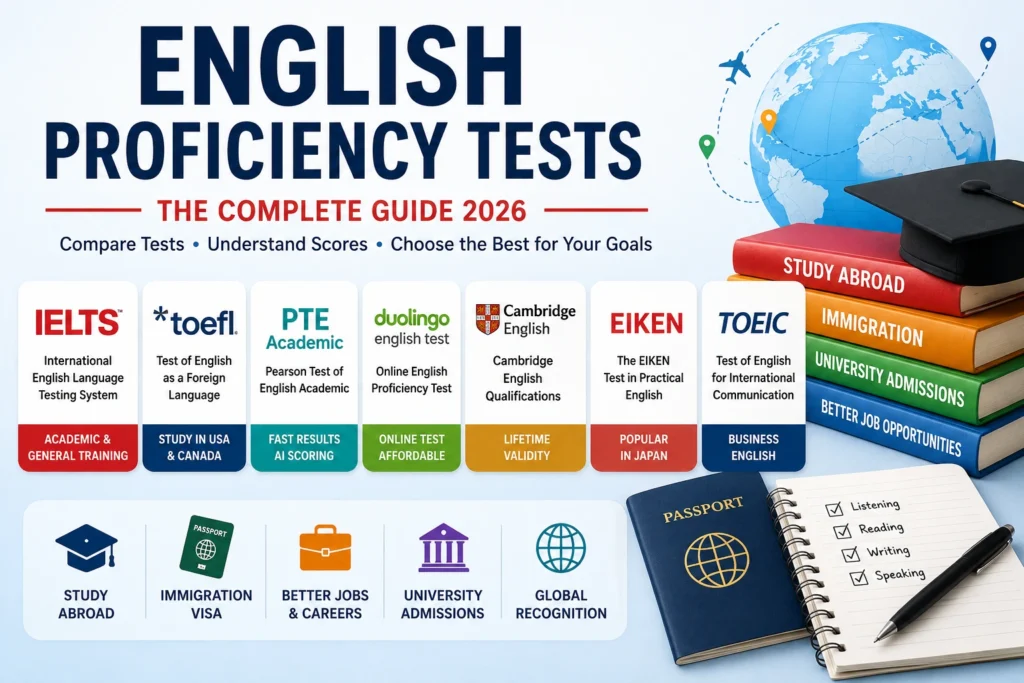
Preparing for an exam? Compare tests in our guide to popular English proficiency tests, and see the best IELTS preparation material.
Books for Learning English
49. English Grammar in Use by Raymond Murphy: The classic self-study grammar book, with clear explanations and exercises on facing pages.
50. English Vocabulary in Use (Cambridge): Topic-based vocabulary practice, available at several levels.
51. Word Power Made Easy by Norman Lewis: Builds vocabulary quickly by teaching word roots, so you can work out new words yourself.
52. The Elements of Style by Strunk and White: A short, practical guide to writing clear English.
For more grammar books and websites, see our list of the [best English grammar