Introduction
If you want to speak English confidently in daily life, at work, during interviews, or while studying abroad, enrolling in a course for spoken English can be one of the best decisions you make. A well-designed spoken English course helps improve your vocabulary, pronunciation, grammar, listening, and communication skills through regular practice.
Whether you are a beginner or an intermediate learner, this guide will help you understand what a spoken English course includes, how to choose the right one, and how to improve your speaking skills faster.
What Is a Course for Spoken English?
A spoken English course is a structured program that focuses on improving your ability to communicate effectively in English. Unlike traditional grammar courses, it emphasizes practical speaking and listening skills.
Most spoken English courses include:
- Daily conversation practice
- Pronunciation exercises
- Vocabulary building
- Grammar for speaking
- Listening comprehension
- Public speaking activities
- Role plays and discussions
- Interview preparation
Benefits of Joining a Spoken English Course
A quality spoken English course can help you:
- Speak English with confidence
- Improve pronunciation and fluency
- Reduce hesitation while speaking
- Prepare for interviews and presentations
- Communicate effectively at work
- Travel confidently in English-speaking countries
- Perform better in IELTS speaking and other English tests
Who Should Take a Spoken English Course?
A spoken English course is suitable for:
- School students
- College students
- Job seekers
- Working professionals
- Teachers
- Business owners
- Travelers
- IELTS and TOEFL candidates
What Should You Learn in a Spoken English Course?
1. Basic Grammar
Understanding sentence structure helps you speak correctly.
2. Everyday Vocabulary
Learn words and expressions commonly used in daily conversations.
3. Pronunciation
Practice stress, rhythm, and intonation to sound more natural.
4. Listening Skills
Listening to native speakers improves your understanding and speaking ability.
5. Speaking Practice
Regular conversations help build fluency and confidence.
Best Ways to Practice Spoken English
You don’t need a classroom to improve your speaking skills.
Try these methods:
- Speak English every day.
- Watch English videos.
- Read aloud.
- Record your voice.
- Join speaking clubs.
- Practice with language partners.
- Think in English.
For a detailed list of useful platforms, read our guide on Best Apps to Practice English Speaking.
Learn from YouTube
Many excellent teachers offer free spoken English lessons.
Explore our carefully selected list of the Best YouTube Channels for Learning English.
Watching English content daily helps improve pronunciation, vocabulary, and listening skills.
Practice with Live Worksheets
Speaking improves faster when combined with grammar and vocabulary practice.
Visit our Live Worksheets section for interactive English exercises that reinforce what you learn in your spoken English course.
How Long Does It Take to Speak English Fluently?
The time depends on your current level and practice routine.
- Beginners: 6–12 months of consistent practice
- Intermediate learners: 3–6 months
- Advanced learners: Continuous improvement through regular conversations
Practicing for just 20–30 minutes every day can make a noticeable difference.
Tips for Faster Progress
- Practice speaking daily.
- Don’t fear making mistakes.
- Learn useful phrases instead of isolated words.
- Listen to English podcasts.
- Speak with friends or language partners.
- Read English articles aloud.
- Maintain a vocabulary notebook.
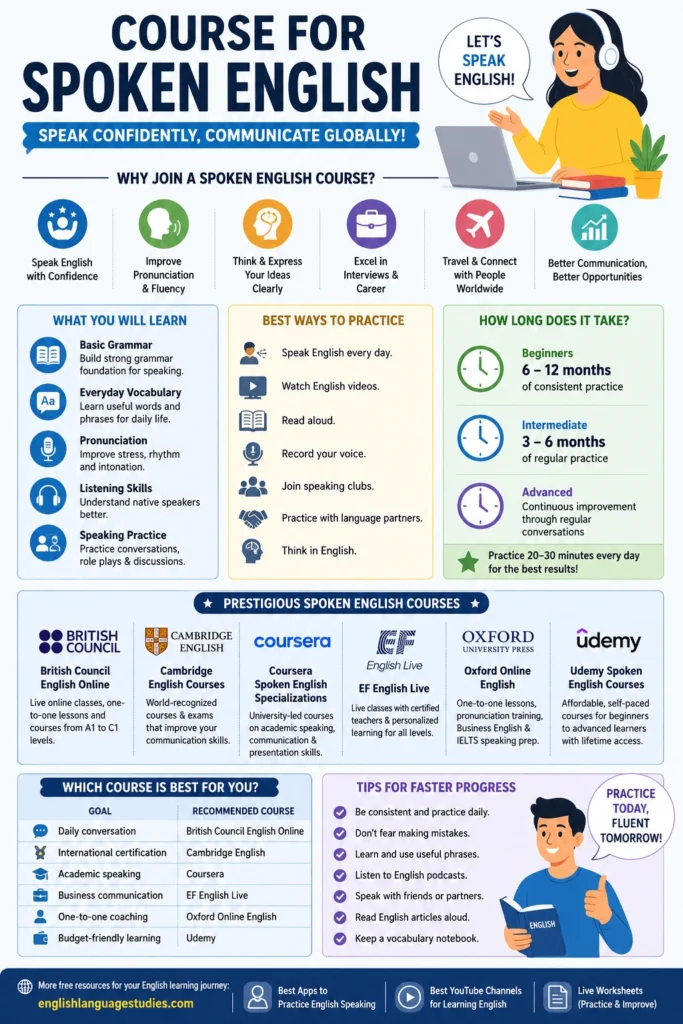
Prestigious Spoken English Courses
If you are looking for a well-structured course for spoken English, consider these internationally recognized options:
1. British Council English Online
The British Council offers live online classes, one-to-one lessons, and self-paced courses designed to improve speaking, pronunciation, vocabulary, and communication skills. Courses follow the internationally recognized CEFR levels (A1–C1).
2. Cambridge English Courses
Cambridge English learning programs are widely respected worldwide. They focus on practical communication and also prepare learners for internationally recognized Cambridge English qualifications.
3. Coursera Spoken English Specializations
Several universities offer English speaking courses through Coursera, including specializations in academic speaking, professional communication, and presentation skills. These courses include video lessons, assignments, and certificates.
4. EF English Live
EF English Live provides live online classes with certified teachers, conversation practice, and personalized learning plans for learners at different proficiency levels.
5. Oxford Online English
Oxford Online English offers one-to-one speaking lessons, pronunciation training, Business English, and IELTS speaking preparation with experienced teachers.
6. Udemy Spoken English Courses
Udemy hosts hundreds of affordable spoken English courses covering beginner to advanced levels. Many include lifetime access and downloadable resources.
Which Course Is Best?
The best spoken English course depends on your goals:
| Goal | Recommended Course |
|---|---|
| Daily conversation | British Council English Online |
| International certification | Cambridge English |
| Academic speaking | Coursera |
| Business communication | EF English Live |
| One-to-one coaching | Oxford Online English |
| Budget-friendly self-paced learning | Udemy |
Frequently Asked Questions
Which course is best for spoken English?
The best course combines speaking practice, pronunciation training, grammar, listening exercises, and regular feedback from instructors.
Can I learn spoken English online?
Yes. Many online courses, mobile apps, YouTube channels, and interactive worksheets provide excellent learning opportunities.
Is grammar necessary for spoken English?
Basic grammar is important because it helps you form correct and meaningful sentences.
How can I practice spoken English at home?
You can practice by speaking aloud, recording yourself, watching English videos, reading aloud, and using language-learning apps.
Conclusion
Choosing the right course for spoken English is only the first step. Real improvement comes from consistent daily practice. Combine a structured course with speaking apps, YouTube lessons, and interactive worksheets to build confidence and fluency more quickly.
If you stay consistent, you’ll soon notice improvements in your pronunciation, vocabulary, and ability to communicate naturally in English.