Educational technology, often called EdTech, has transformed the way teachers teach and students learn. From AI-powered lesson planning to online classrooms and interactive quizzes, technology is making education more engaging, personalized, and efficient.
Whether you are a teacher looking to save time or a student hoping to improve your learning experience, the right educational technology tools can make a significant difference.
In this guide, we’ll explore the best educational technology tools available in 2026 and explain how each one can support teaching and learning.
What Is Educational Technology?
Educational technology is the use of digital tools, software, applications, and online platforms to improve learning and teaching. It includes everything from virtual classrooms and educational apps to artificial intelligence and learning management systems.
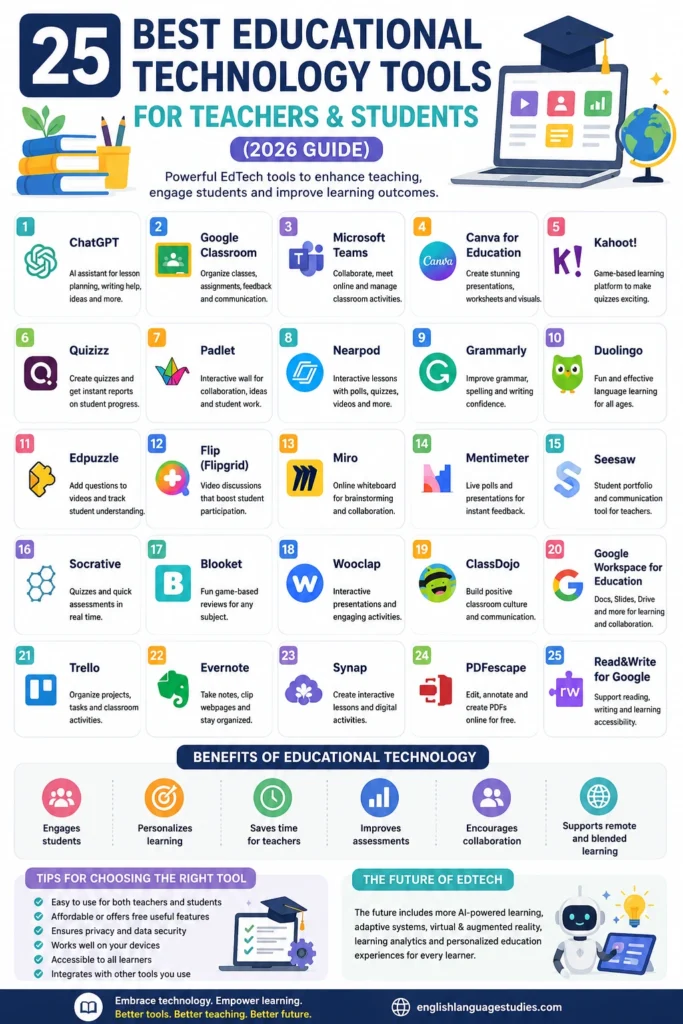
Benefits of Educational Technology
- Makes learning interactive and engaging.
- Supports personalized learning.
- Saves teachers time on lesson planning and grading.
- Encourages collaboration between students.
- Provides instant feedback through quizzes and assessments.
- Enables remote and hybrid learning.
Best Educational Technology Tools
1. ChatGPT
ChatGPT helps teachers create lesson plans, quizzes, worksheets, discussion questions, and classroom activities within minutes. Students can use it for explanations, brainstorming ideas, and writing practice.
Best for: Lesson planning and writing support.
2. Google Classroom
Google Classroom allows teachers to organize classes, distribute assignments, collect homework, and communicate with students in one place.
Best for: Classroom management.
3. Microsoft Teams for Education
Microsoft Teams combines video meetings, assignments, collaboration, and file sharing in one platform.
Best for: Online and hybrid learning.
4. Canva for Education
Teachers can create visually appealing presentations, worksheets, posters, and classroom resources. Students can also design projects and presentations.
Best for: Visual learning.
5. Kahoot!
Kahoot! turns quizzes into exciting classroom games that increase participation and motivation.
Best for: Interactive classroom quizzes.
6. Quizizz
Quizizz allows teachers to create self-paced quizzes with detailed performance reports.
Best for: Formative assessment.
7. Padlet
Padlet is a digital collaboration board where students can post ideas, images, videos, and assignments.
Best for: Brainstorming and collaboration.
8. Nearpod
Nearpod makes presentations interactive with quizzes, polls, videos, and virtual field trips.
Best for: Interactive lessons.
9. Grammarly
Grammarly helps students improve grammar, spelling, punctuation, and writing style.
Best for: English writing.
10. Duolingo
Duolingo provides gamified language learning for students of all ages.
Best for: Language learning.
For teachers looking to organize lessons, assignments, discussions, and student feedback in one place, the Canvas Learning Platform provides a comprehensive solution for managing online and blended courses.
How AI Is Changing Education
Artificial intelligence is one of the biggest trends in educational technology. AI tools can:
- Generate lesson plans.
- Create worksheets.
- Provide personalized tutoring.
- Give instant feedback.
- Assist with language learning.
- Support differentiated instruction.
When used responsibly, AI enhances teaching rather than replacing teachers.
Tips for Choosing the Right Educational Technology Tool
Consider the following factors before selecting an EdTech tool:
- Ease of use
- Cost and free features
- Student privacy and security
- Compatibility with your devices
- Accessibility features
- Integration with other classroom tools
The Future of Educational Technology
The future of education will include more AI-powered learning, adaptive learning systems, virtual reality, augmented reality, learning analytics, and personalized educational experiences. Teachers who embrace these technologies will be better equipped to meet the needs of modern learners.
Frequently Asked Questions
What is educational technology?
Educational technology is the use of digital tools and software to improve teaching, learning, assessment, and classroom management.
Why is educational technology important?
It increases student engagement, improves access to learning, supports personalized instruction, and saves teachers time.
What are examples of educational technology?
Examples include ChatGPT, Google Classroom, Canva for Education, Kahoot!, Quizizz, Nearpod, Microsoft Teams, Grammarly, and Duolingo.
Is AI part of educational technology?
Yes. AI-powered tools are becoming an important part of education by helping teachers create resources and supporting students with personalized learning.
Conclusion
Educational technology is reshaping classrooms by making learning more engaging, accessible, and efficient. Whether you’re a teacher planning lessons, a student preparing for exams, or a parent supporting learning at home, choosing the right EdTech tools can make a meaningful difference.
As technology continues to evolve, staying informed about new educational tools will help you create richer learning experiences and improve educational outcomes.
Continue Learning with English Language Studies
If you’re looking for more free teaching resources, explore our collection of Lesson Plans for ready-to-use classroom activities. Whether you teach primary, secondary, or ESL students, you’ll find practical ideas that integrate well with modern educational technology.
Educational technology becomes even more effective when combined with engaging practice materials. Browse our Live Worksheets and Printable English Worksheets to reinforce grammar, vocabulary, reading, and writing skills through interactive learning.
Teachers preparing students for international English exams can also benefit from our IELTS Preparation resources, which include study guides, practice materials, and exam strategies. Many of the digital tools discussed in this article can be used to create engaging IELTS classroom activities.
To improve students’ language skills, don’t miss our comprehensive guides on English Grammar and Reading Comprehension Worksheets. These resources pair perfectly with EdTech tools such as Google Classroom, Canva, Kahoot!, and Quizizz.
For more research-based articles on teaching methods, digital learning, and language education, visit our Educational Articles section, where we regularly publish practical content for teachers, students, and parents.