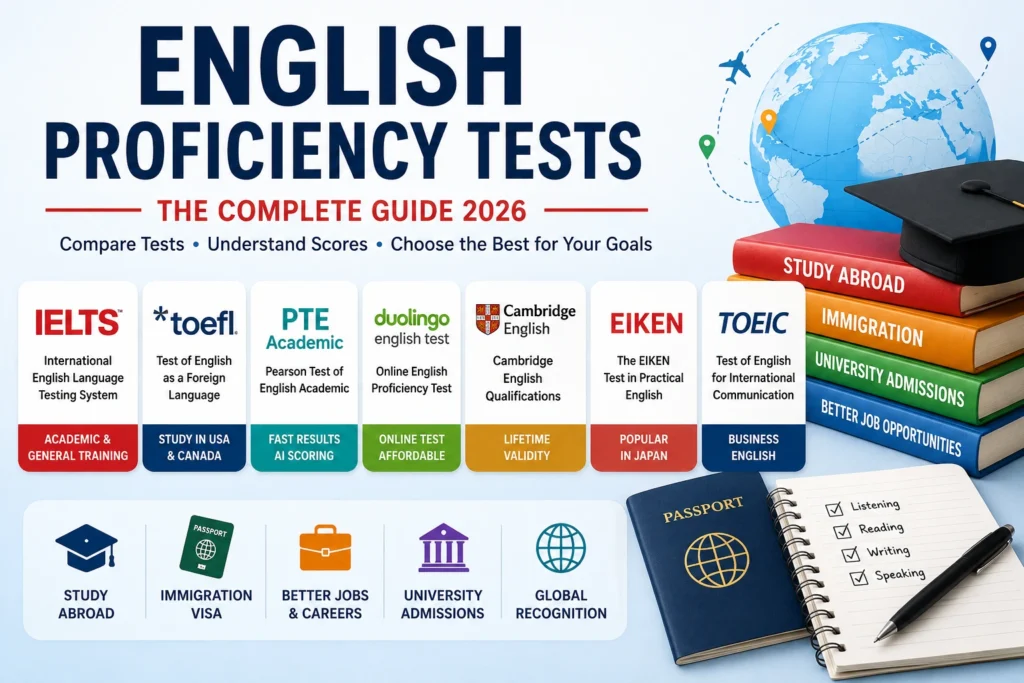
Preparing for IELTS can be challenging, especially when you are unsure why you keep making mistakes or how to improve your score. An English tutor for IELTS can provide personalized instruction, targeted practice, and feedback based on your strengths and weaknesses.
However, not every English tutor is an IELTS specialist, and not every IELTS learner needs the same kind of support. A student who needs to improve IELTS Writing may require a very different learning plan from someone who mainly struggles with Speaking.
This guide explains what an IELTS tutor does, when you may need one, how to choose the right tutor, and how to get the most from your IELTS lessons.
What Is an English Tutor for IELTS?
An English tutor for IELTS is a teacher who helps learners prepare for the International English Language Testing System.
IELTS assesses four language skills:
- Listening
- Reading
- Writing
- Speaking
A good IELTS tutor should understand the format of the test as well as the English skills required to perform well.
IELTS tutoring may include:
- Practice questions
- Speaking conversations
- Writing feedback
- Reading strategies
- Listening practice
- Vocabulary development
- Grammar correction
- Pronunciation
- Mock tests
- Time-management strategies
- Individual study plans
The purpose of an IELTS tutor is not simply to give students practice tests. Effective tutoring should help learners understand why they are losing marks and what they can do differently.
Do You Need an IELTS Tutor?
Not every IELTS candidate needs private tutoring.
Self-study can work well if you:
- Already have a strong level of English
- Understand the IELTS format
- Can identify your mistakes
- Have good study materials
- Can maintain a regular study schedule
- Have someone who can provide feedback on your speaking or writing
An IELTS tutor can be particularly useful if:
- You have taken IELTS before but did not achieve your target score.
- You don’t know why your score has stopped improving.
- You struggle with IELTS Writing.
- You lack confidence in Speaking.
- You have difficulty managing time.
- You need a specific band score.
- You have limited preparation time.
- You need regular accountability.
The question is not simply whether you need a tutor. The better question is:
What part of my IELTS preparation would benefit most from personalized guidance?
What Does an IELTS Tutor Teach?
A tutor may work on all four IELTS components or specialize in one or two.
IELTS Listening
IELTS Listening requires more than understanding individual words.
A tutor can help you practise:
- Predicting answers
- Identifying key information
- Following conversations
- Recognizing paraphrasing
- Spelling
- Numbers and dates
- Multiple-choice questions
- Note completion
- Sentence completion
- Map and diagram questions
You should also learn how to use the time before and during the recording effectively.
IELTS Reading
IELTS Reading can be difficult because candidates have limited time and may encounter unfamiliar vocabulary.
An IELTS tutor can help you develop strategies for:
- Skimming
- Scanning
- Identifying keywords
- Recognizing paraphrases
- Matching headings
- True/False/Not Given
- Yes/No/Not Given
- Multiple choice
- Sentence completion
- Summary completion
The goal should not be to teach learners to use one rigid strategy for every passage. Different question types may require different approaches.
IELTS Writing
For many candidates, Writing is one of the areas where personalized feedback is especially valuable.
An IELTS writing tutor can help with:
- Task response
- Organization
- Paragraph development
- Coherence and cohesion
- Vocabulary
- Grammar
- Sentence structure
- Academic style
- Task 1 reports
- Task 2 essays
One of the biggest advantages of tutoring is that you can submit your writing and receive individualized feedback.
Instead of simply being told that an essay is “good” or “bad,” you should understand what needs improvement and why.
IELTS Speaking
Speaking lessons can include practice with:
- Part 1 questions
- Part 2 cue cards
- Part 3 discussions
- Fluency
- Pronunciation
- Vocabulary
- Grammar
- Developing answers
- Expressing opinions
A good speaking tutor should give you enough time to speak and then provide useful feedback.
If the tutor spends most of the lesson talking, you are missing one of the most valuable parts of speaking preparation: actually speaking.
IELTS Tutor for Writing
If your Writing score is lower than your other bands, a specialized tutor may be particularly useful.
For example, you may have good vocabulary but still lose marks because:
- Your ideas are not sufficiently developed.
- Your paragraphs lack clear organization.
- Your response does not fully address the question.
- Your examples are unclear.
- Your sentences contain frequent grammatical errors.
- Your conclusion does not effectively summarize your position.
A tutor can identify patterns across several pieces of writing.
This is more useful than correcting one essay in isolation.
What to Ask Your Writing Tutor
Ask:
- Which errors do I make repeatedly?
- Is my response answering the question fully?
- Are my paragraphs logically organized?
- How can I develop my ideas?
- Which vocabulary problems affect my writing?
- What grammar should I prioritize?
- What should I do differently in my next essay?
The aim should be to become a better writer, not simply to have one essay corrected.
IELTS Speaking Tutor
An IELTS speaking tutor should help you become more comfortable expressing ideas spontaneously.
A typical lesson might include:
Part 1: Short questions about familiar topics
Part 2: One-minute preparation followed by a longer response
Part 3: Discussion and abstract questions
The tutor can then provide feedback on:
- Fluency
- Grammar
- Vocabulary
- Pronunciation
- Idea development
- Hesitation
- Repetition
Try not to memorize complete answers.
Memorized answers can sound unnatural and may not work when the examiner asks a different question.
Instead, learn useful vocabulary, structures, and strategies that allow you to develop your own answers.
How to Choose an English Tutor for IELTS
Choosing the right tutor is more important than simply choosing someone who advertises themselves as an IELTS teacher.
1. Check IELTS Experience
Ask whether the tutor has experience preparing students for IELTS.
A tutor who understands the test format and assessment criteria is generally better positioned to provide targeted preparation.
2. Ask About Qualifications
Look at the tutor’s academic and teaching background.
Relevant qualifications may include:
- English
- Applied Linguistics
- Education
- TESOL
- TEFL
- CELTA
- Other recognized English-language teaching qualifications
Qualifications alone do not guarantee effective IELTS teaching, but they can provide useful evidence of subject knowledge.
3. Ask How They Assess Your Level
A good tutor should not immediately give you the same study plan used for every student.
Ask:
“How will you identify my strengths and weaknesses?”
An initial assessment can help establish your approximate level and determine which skills need the most attention.
4. Ask for a Study Plan
The tutor should be able to explain what you will work on and why.
For example:
Weeks 1–2: Diagnose weaknesses and establish strategies
Weeks 3–5: Intensive Writing and Speaking practice
Weeks 6–7: Reading and Listening improvement
Week 8: Mock tests and final correction
The actual schedule should depend on your level and target score.
5. Look for Individualized Feedback
This is one of the main reasons to hire a tutor.
If every student receives exactly the same lesson regardless of their mistakes, the tutoring may not be sufficiently personalized.
6. Consider a Trial Lesson
A trial lesson allows you to evaluate the tutor before committing.
During the lesson, ask yourself:
- Did the tutor understand my target?
- Did I receive useful feedback?
- Were explanations clear?
- Did I get enough time to speak?
- Did the tutor identify specific weaknesses?
- Did the lesson have a clear purpose?
What IELTS Band Score Should You Target?
Your target score depends on why you are taking IELTS.
Different universities, employers, immigration programs, and professional organizations may have different requirements.
Therefore, don’t choose a target simply because someone tells you that “Band 7 is good.”
First determine the score required by the institution or organization you are applying to.
Then work backward from that target.
For example:
Current level → target score → skill gaps → study plan → regular practice → mock tests
This makes your preparation more focused.
How Many IELTS Tutoring Lessons Do You Need?
There is no universal number.
The number of lessons you need depends on:
- Your current English level
- Target band score
- Weaknesses
- Previous IELTS experience
- Test date
- Time available for self-study
- Lesson frequency
A learner who is already close to the target score may need relatively little tutoring.
Someone with significant weaknesses in grammar, vocabulary, Writing, and Speaking may need a longer preparation period.
Instead of asking:
“How many lessons do I need?”
ask:
“What specific skills do I need to improve before my test?”
How Much Does an IELTS Tutor Cost?
IELTS tutoring prices vary considerably.
The cost may depend on:
- Tutor qualifications
- Experience
- Location
- Lesson length
- Online or face-to-face format
- Individual or group lessons
- Specialization
- Demand
- Test preparation package
Some tutors charge per lesson, while others offer packages.
When comparing prices, look at the total value of the service.
A tutor who charges more but provides detailed writing feedback, speaking assessments, homework, and progress tracking may provide better value than a cheaper tutor who simply conducts practice tests.
Online IELTS Tutor vs. Face-to-Face Tutor
Both formats can work.
Online IELTS Tutoring
Advantages include:
- Flexible scheduling
- No travel
- Access to tutors in different locations
- Easy sharing of documents
- Online writing correction
- Video speaking practice
- Convenient lessons from home
Face-to-Face IELTS Tutoring
Advantages may include:
- Direct physical interaction
- Fewer technology problems
- A classroom environment
- Easier communication for some learners
The best format depends on your personal preferences and circumstances.
How to Get the Most From an IELTS Tutor
Hiring a tutor does not guarantee a high score.
You need to participate actively.
Complete Homework
If your tutor gives you writing or speaking tasks, complete them.
The feedback is useful only if you apply it.
Keep an Error Log
Record recurring mistakes.
For example:
Grammar: subject-verb agreement
Vocabulary: incorrect collocations
Writing: unclear topic sentences
Speaking: excessive hesitation
Review these regularly.
Practise Under Time Limits
IELTS is a timed examination.
You need to develop the ability to perform under realistic conditions.
Don’t Memorize Everything
Memorizing complete essays or speaking answers can be risky.
Instead, develop flexible language skills and learn how to organize ideas.
Ask for Honest Feedback
Tell your tutor that you want realistic feedback rather than encouragement alone.
You need to know what is preventing you from reaching your target score.
IELTS Tutor vs. Self-Study
Self-study is entirely possible for many IELTS candidates.
You can use:
- Practice tests
- Books
- Reading materials
- Listening resources
- Writing guides
- Vocabulary exercises
- Speaking questions
- Online lessons
- Educational websites
However, some areas are harder to evaluate independently.
Writing and Speaking are particularly important examples.
You can compare your reading answers with an answer key, but it is much harder to accurately judge your own writing or speaking performance.
That is where a tutor can add significant value.
Can AI Replace an IELTS Tutor?
AI tools can be useful during IELTS preparation.
They can help you:
- Generate practice questions
- Practise conversations
- Brainstorm essay ideas
- Check grammar
- Build vocabulary exercises
- Simulate speaking questions
- Create study plans
- Practise reading and listening activities
However, AI-generated feedback should be treated carefully.
An IELTS candidate should ideally combine technology with reliable learning materials and, when possible, qualified human feedback.
A human tutor can recognize patterns in your performance, adapt lessons, challenge weak reasoning, and provide individualized guidance.
AI can therefore be a useful supplement, but it should not automatically be treated as a replacement for a qualified IELTS teacher.
Common Mistakes When Choosing an IELTS Tutor
Choosing Based Only on Price
The cheapest tutor may not provide the best value.
Believing Guaranteed Band Scores
Be cautious about promises such as:
“I guarantee Band 8 in four weeks.”
Your result depends on your current level, preparation, performance, and the examination itself.
Choosing Someone Who Teaches Only Test Tricks
Strategies can help, but IELTS ultimately assesses language ability.
You need both language development and test familiarity.
Hiring a Tutor Without Checking Their Experience
Ask about their IELTS teaching background and the types of students they have worked with.
Expecting the Tutor to Do Everything
You still need independent practice.
Questions to Ask an IELTS Tutor Before Hiring Them
Ask:
- What IELTS experience do you have?
- What qualifications do you have?
- Do you specialize in Academic IELTS, General Training IELTS, or both?
- How do you assess a student’s current level?
- How will you identify my weaknesses?
- How will you estimate my current band level?
- How much Writing feedback will I receive?
- How much Speaking practice will I receive?
- Will you provide homework?
- How often will I take mock tests?
- How will you measure my progress?
- Do you offer a trial lesson?
- How long is each lesson?
- What happens if I need to reschedule?
A Simple IELTS Tutoring Plan
A tutor may organize preparation around the following stages.
Stage 1: Assessment
Identify your current strengths and weaknesses.
Stage 2: Target Setting
Determine the required overall and individual band scores.
Stage 3: Skill Development
Work on the areas that are limiting your performance.
Stage 4: Targeted Practice
Complete exercises and tasks focused on your weaknesses.
Stage 5: Mock Testing
Complete realistic timed practice.
Stage 6: Final Correction
Review recurring mistakes and refine your test strategies.
This is only a framework. A good tutor should adapt it to your individual situation.
Final Thoughts
An English tutor for IELTS can be valuable when you need personalized guidance, especially if you have a specific target score or are struggling with Writing or Speaking.
The best tutor is not necessarily the person with the highest advertised score or the lowest price. Look for someone who understands IELTS, can identify your weaknesses, provides specific feedback, and adapts lessons to your needs.
Before hiring a tutor, establish your target score and determine which skills need the most improvement.
Then use tutoring as part of a broader preparation routine that includes regular reading, listening, writing, speaking, vocabulary development, and realistic practice tests.
Ultimately, an IELTS tutor can provide the direction and feedback you need—but your consistent practice is what turns that guidance into improved performance on test day.
If you are unsure what type of teacher you need, our complete guide to finding the right English tutor can help you compare your options.